 IT
IT EN
EN
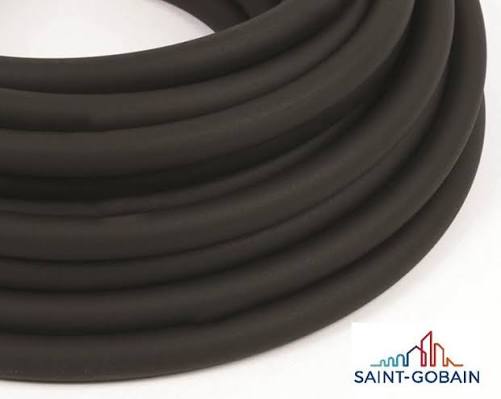
HIGH PERFORMANCE ALTERNATIVE TO RUBBER HOSES FOR CHEMICAL DISTRIBUTION
Engineered to Resist Hydrocarbons Specially formulated for chemical distribution, Tygon® A-60-G tubing outperforms neoprene, EPDM and other general purpose tubing in test after test and application after application.
It will not weaken or crack after years of exposure to heat and ozone, providing longer pump life in industrial and institutional chemical cleaning applications. Designed for exceptional performance and on-the-job reliability, Tygon® A-60-G tubing handles temperatures ranging from -75°F (-60°C) to 75°F (135°C), allowing the use of a single material over a wide temperature range. It is thermally sealed and can be joined without fittings. It also offers excellent resistance to inorganic fluids (acids and bases). Unmatched Life in Peristaltic Pump Applications Peristaltic pumps are used in a wide range of markets and applications, including industrial and institutional chemical cleaning dispensing.
The universal requirement common to these applications is the hose's ability to withstand the constant high flexural fatigue exerted by the pump rollers. Tygon® A-60-G hose outlasts and surpasses virtually all other general-purpose hoses in peristaltic pumps due to its high flexural fatigue resistance.
Ideal for use in vacuum systems Tygon® A-60-G tubes are available in standard vacuum sizes that withstand a full vacuum (29.9" [759 mm] of mercury) at 73°F (23°C).
Unlike typical rubber vacuum hoses, Tygon® hoses resist cracking and aging, which are common causes of vacuum hose failure.
Features and Benefits
Typical applications
Typical physical properties
ASTM method property VALUE or RATINGat 100% elongation, psi (MPa) 410 (2.8)
at 300% elongation, psi (MPa) 800 (5.5)
How does Tygon® tubing compare to neoprene® tubing?
The following information is based on tests conducted for 28 days at 73°F, unless otherwise stated. The information is based on reliable test results. Use it as a guide only, taking into account variables such as temperature and fluid contamination in your application.
Chemically tested performance
Neoprene® Tygon®
20% ammonium hydroxide Excellent Good
10% Sodium Hydroxide Excellent Sufficient
50% Sulfuric Acid Excellent Excellent
90% Sufficient Sulfuric Acid Failed
Methanol Excellent Excellent
37% hydrochloric acid Excellent Sufficient
Ethanol Good Good
50% Ethylene Glycol Excellent Excellent
Water: 28 days @ 220°F Excellent Fair
Air: 7 days @ 275°F Good Fail
Ozone: 100 pphm, 40°C, 28 days Excellent Sufficient
Fatigue resistance 750,000 cycles 2,000 cycles
Ross Flex @ 100 CPM Cutting Growth 1” Growth 0.1”
Hot air temperature aging, +22% tensile strength, crumbled
7 days @ 275°F +9% elongation
Hot air 7 days +15% traction, Sufficient
@ 220°F +14% elongation Good
Typical environmental resistance
Ozone, 300 pphm Excellent Good
Weather (UV)* Excellent-Good Good
Excellent Acids Good
Excellent Alkali Good
Lubricating oils Sufficient Sufficient
Gas permeability Sufficient Sufficient
*UV resistance properties are affected by additives. These comparisons are based on published material properties and are not guaranteed for all samples or the AP.